
2026/05/05 EverQuote (EVER): A "Davis Double" in the Insurance Brokerage Space?

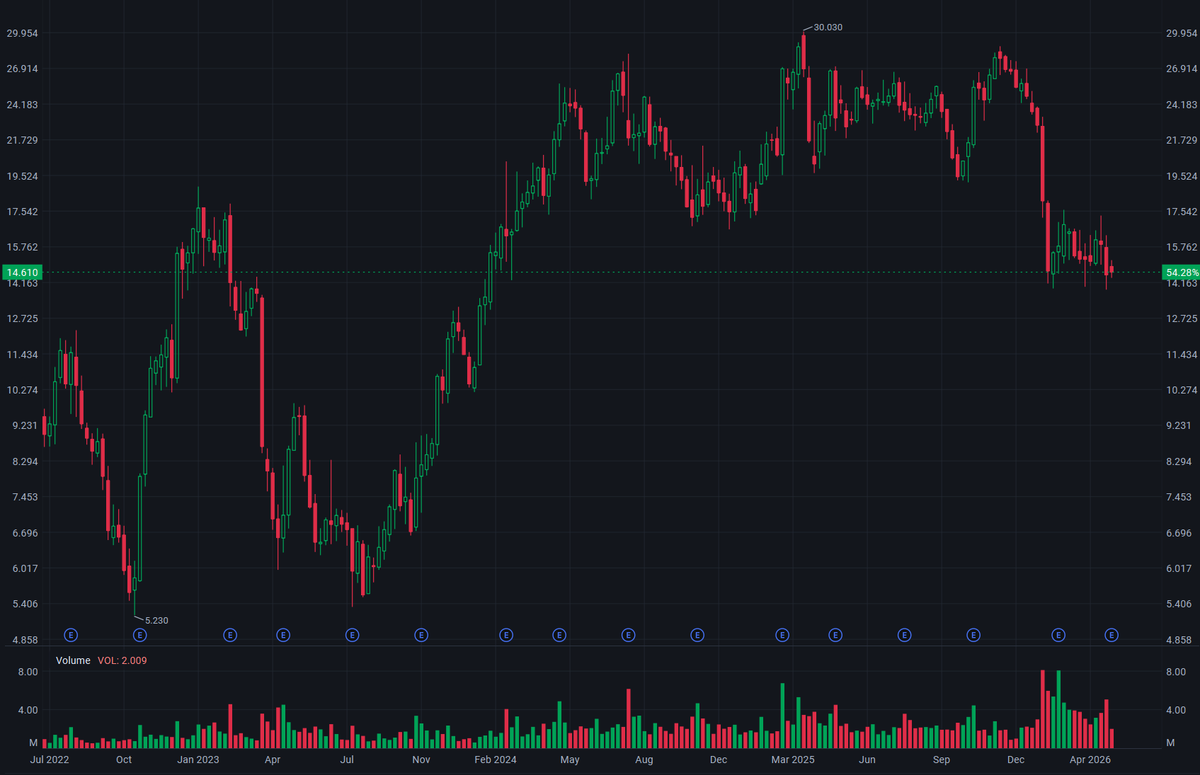
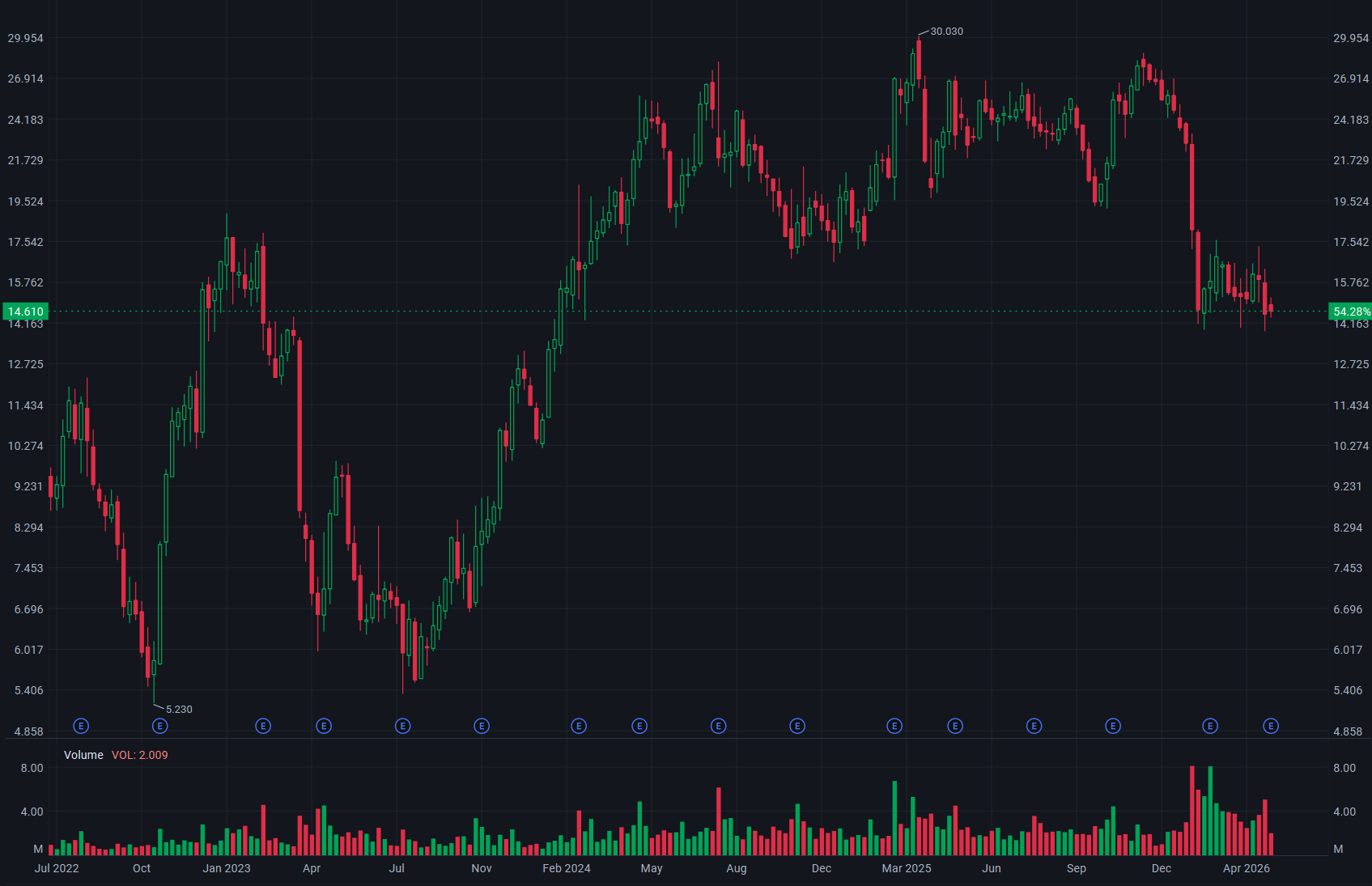
EverQuote’s business is not selling insurance; it’s a marketplace. When consumers want to compare auto or home insurance rates, they visit EverQuote’s site. Every form filled out becomes a high-value "marketing lead." Using proprietary algorithms, EverQuote "wholesales" this precise data to insurance giants like Progressive and State Farm, or to thousands of local agents, generating revenue based on data.
If there is a moat, it lies in its private data assets—data that ChatGPT and other LLMs cannot scrape. EverQuote holds deep insurance data from over 450 million consumer submissions. This "Deep Web data"—including driving habits, credit tendencies, and real-time intent—is a private asset untouchable by general AI models, yet it serves as a critical marketing starting point for insurance titans.
Revenue Breakdown: Auto insurance accounts for 90.3% of total revenue, while Home and Renters insurance currently stands at 9.7%.
I. Financial Performance: Scaling Up
Starting in 2025, U.S. insurance giants significantly hiked premiums, driving consumers to "shop around." This macro tailwind has triggered a performance explosion for EverQuote. Today, the company released its Q1 earnings, demonstrating strong operating leverage (where small revenue gains drive outsized profit growth):
- Revenue: Reached $190.9 million (up 15% YoY), exceeding the upper end of market expectations ($180M).
- Profit Engine: GAAP Net Income hit $18.7 million (+133% YoY). Adjusted EBITDA reached a record $29.3 million (+30% YoY).
- Note on the +133% jump: Due to persistent profitability in Q1 2026, the company activated deferred tax assets from late 2025. This minimized GAAP tax expenses, artificially inflating the net income growth figure. The +30% Adjusted EBITDA is a more accurate reflection of real growth.
- Advertising Efficiency (VMD): Variable Marketing Dollar (VMD) profit reached $55.9 million (+19% YoY), outpacing revenue growth. This suggests that EverQuote is becoming more efficient at buying traffic from Google/Meta rather than being drained by them.
- The Second Curve: Home and Renters insurance revenue hit $18.5 million, growing at 33%—significantly faster than the core auto segment (13%).
- Cash Flow & Buybacks: Operating cash flow reached a record $29.6 million. The company holds $178.5 million in cash with zero debt, and spent $19.9 million to repurchase 1.1 million shares in Q1.
Management noted that by deploying "Agentic AI," revenue per employee has nearly tripled over the last three years, signaling significant cost-cutting and efficiency gains.
II. Valuation Analysis: Undervalued with M&A Potential
- P/E Estimate: Stripping away the tax-related fluctuations and assuming a standard 21% tax rate with depreciation/amortization, normalized annual net income is estimated at $60 million. This puts the normalized P/E at approximately 10x. A 10x P/E for a company growing profits at 30% suggests strong potential for a valuation re-rating.
- Price-to-Sales (P/S): Currently trading at roughly 0.75x P/S. With Q2 guidance forecasting revenue growth to accelerate to 21%, the current valuation does not fully price in its growth potential.
- M&A Value: A company with ample cash, zero debt, and the most complete insurance distribution API in the U.S. is a perfect "plug-in" for large banks or internet giants looking to pivot into financial services.
III. Investment Thesis: An "Asymmetric" Opportunity for a Light Position
As a pure intermediary, EverQuote still faces traffic pressure from giants like Google. Many perceive it as "just a comparison site" or a "plain-vanilla middleman," making the moat feel thin—thus, it is not suitable for a heavy/concentrated position.
However, because the valuation is at historic lows (10x P/E vs. 30% profit growth) and the balance sheet is pristine, there is a strong floor provided by its M&A value (derived from its traffic entry point and deep private data). Combined with aggressive buybacks and the "second curve" growth in home insurance, the setup offers an asymmetric upside. If it successfully integrates as a "private data plug-in" for more AI systems, profit growth could surprise to the upside.
Risk Factors to Watch:
- Traffic Dependency: EverQuote is essentially a "traffic arbitrageur." If Google changes its search algorithms or enters the comparison space directly via "Google Insurance," EverQuote’s Customer Acquisition Cost (CAC) could spike without warning.
- Cyclicality: The 2025 premium hikes were a cyclical tailwind. When the market softens and premium growth slows, the consumer incentive to "shop around" will diminish.
- Concentration Risk: If majors like Progressive or State Farm decide third-party leads are too expensive, they could cut budgets instantly, causing EverQuote’s revenue to stall.
5 mai 2026 | EverQuote (EVER) : Un « Double de Davis » pour ce courtier en assurance ?
Le métier d'EverQuote n'est pas de vendre des assurances, mais de gérer une place de marché. Lorsque les consommateurs souhaitent comparer les tarifs d'assurance auto ou habitation, ils se rendent sur son site. Chaque formulaire rempli devient une « piste commerciale » (lead) de haute valeur. Grâce à ses algorithmes, EverQuote revend ces données avec précision aux géants comme Progressive ou State Farm, ainsi qu'à des milliers d'agents locaux. Son modèle repose sur la monétisation de la donnée.
Son véritable « fossé défensif » (moat) réside dans ses actifs de données privées que les IA comme ChatGPT ne peuvent pas explorer. EverQuote détient les données d'assurance approfondies de plus de 450 millions de soumissions. Ces données du « Web profond » (habitudes de conduite, scores de crédit, besoins en temps réel) sont des actifs privés inaccessibles aux modèles de langage généraux, mais constituent un point de départ marketing précieux pour les assureurs.
Répartition du chiffre d'affaires : L'assurance automobile représente 90,3 % des revenus totaux, tandis que l'assurance habitation et locataire s'élève à 9,7 %.
I. Données financières : En pleine croissance
Depuis 2025, les assureurs américains ont massivement augmenté leurs primes, poussant les consommateurs à comparer davantage. C’est le moteur macroéconomique de l’explosion des performances d'EverQuote. Aujourd’hui, EverQuote a publié ses résultats du T1, affichant un fort effet de levier opérationnel :
- Chiffre d'affaires : 190,9 millions $ (+15 % sur un an), dépassant la fourchette haute des prévisions du marché (180 M$).
- Moteur de profit : Le bénéfice net GAAP a atteint 18,7 millions $ (+133 %). L'EBITDA ajusté a atteint un record historique de 29,3 millions $ (+30 %).
- Note sur le bond de 133 % : En raison d'une rentabilité continue, la société a activé des actifs d'impôts différés fin 2025. Cela a réduit artificiellement la charge fiscale au T1 2026, amplifiant la croissance du bénéfice net comptable. L'EBITDA ajusté (+30 %) reflète mieux la croissance réelle.
- Efficacité publicitaire (VMD) : Le profit par dollar de marketing variable (VMD) a atteint 55,9 millions $ (+19 %), dépassant la croissance des revenus. Cela prouve que l'efficacité de l'acquisition sur Google/Meta s'améliore.
- La « deuxième courbe » de croissance : Les revenus de l'assurance habitation ont atteint 18,5 millions $, avec une croissance de 33 %, surpassant celle de l'auto (13 %).
- Flux de trésorerie et rachats : Le flux de trésorerie opérationnel a atteint un record de 29,6 millions $. La société dispose de 178,5 millions $ en cash et zéro dette. Elle a racheté pour 19,9 millions $ d'actions au T1.
La direction attribue ces gains à l'utilisation massive de l'IA Agentique (Agentic AI), qui a permis de tripler le revenu par employé en trois ans.
II. Analyse de la valorisation : Sous-évaluée avec un potentiel de rachat
- Estimation du P/E (Cours/Bénéfice) : En neutralisant l'effet fiscal et en appliquant un taux normalisé, on peut estimer un bénéfice net annuel normé de 60 millions $. Cela donne un P/E normé d'environ 10x. Pour une entreprise dont les profits croissent de 30 %, ce multiple offre un fort potentiel de réévaluation.
- P/S (Cours/Chiffre d'affaires) : Actuellement à seulement 0,75x. Avec des prévisions de croissance du CA de 21 % pour le T2, la valorisation actuelle ne semble pas intégrer tout le potentiel.
- Valeur de rachat : Une société sans dette, riche en liquidités et possédant l'interface de distribution d'assurance la plus complète des États-Unis est une cible idéale pour une grande banque ou un géant du web souhaitant s'étendre dans les services financiers.
III. Thèse d'investissement : Une opportunité « asymétrique »
En tant que pur intermédiaire, EverQuote reste vulnérable à la domination de Google. Sa barrière à l'entrée peut sembler fragile, ce qui ne justifie pas une position trop lourde (overweight).
Cependant, avec une valorisation au plus bas historique (P/E de 10x pour 30 % de croissance), une santé financière de fer et une valeur de rachat qui protège la baisse, le titre offre un profil risque/rendement asymétrique très intéressant. Si la « deuxième courbe » (habitation) se confirme et que la société s'intègre comme un « plugin de données privées » pour de futurs systèmes d'IA, les bénéfices pourraient exploser.
Risques à surveiller :
- Dépendance au trafic : EverQuote « déplace » du trafic. Si Google modifie ses algorithmes ou lance son propre comparateur (Google Insurance), les coûts d'acquisition pourraient s'envoler.
- Cyclicité : La hausse des primes de 2025 est un vent favorable cyclique. Si le marché se stabilise (Soft Market), l'incitation des clients à comparer diminuera.
- Concentration des partenaires : Si Progressive ou State Farm réduisent leurs budgets sur les plateformes tierces, les revenus d'EverQuote chuteront mécaniquement.
2026/05/05 EverQuote (EVER): 保险中介的戴维斯双击?
EverQuote的业务不是卖保险,当人们想买车险或房险时,人们会去它的网站比价。用户填写的每一份表格变成高价值的“营销线索”。EverQuote 通过算法,把信息精准“批发”给像 Progressive 或 State Farm 这样的保险巨头,或者是数千个本地代理人。依靠数据收费。
如果说它有护城河的话,它的护城河就是现在chatGPT们扒不到的私有数据资产:掌握超过 4.5 亿次消费者提交的深度投保数据。这些包含驾驶习惯、信用倾向和实时需求的“深网数据”,是通用大模型无法抓取的私有资产,却是保险巨头们珍贵的营销起点。
汽车保险业务占据了总收入的 90.3%,房屋及租房保险业务目前占比为 9.7%。
一、 财报数据:成长中
2025 年起美国保险巨头大幅调高保费,导致消费者频繁“货比三家”,这是 EverQuote 业绩爆发的宏观推手。
今天EverQuote 发布了 Q1 财报。这份财报里EverQuote 展示了经营杠杆效应,即营收的小幅增长带动了利润的更大增长:
- 营收规模:实现 1.909 亿美元(同比增长 15%),高于市场预期的 1.8 亿美元上限。
- 利润引擎:GAAP 净利润达 1,870 万美元,同比增 133%;调整后 EBITDA 创历史新高,达 2,930 万美元(同比增长 30%)。根据 2025 年末的财务记录,EverQuote 拥有可观的递延所得税资产。在 2026 年 Q1,由于公司持续盈利,部分税务抵扣被激活,使得 GAAP 准则下的所得税费用处于极低水平,从而放大了净利润的账面数字,这让GAAP净利润增幅很夸张(+133%)。 看调整后 EBITDA (+30%)更能反映真实增长。
- 广告效率(VMD)提升: Q1 的可变营销美元(VMD)利润达到 5,590 万美元,同比增长 19%,高于营收增速。只要 VMD 增速快于营收,就说明它在 Google/Meta 的买量效率在提升,而非被流量平台吸干。
- 第二曲线增长中:Q1 房屋及租房保险营收达到 1,850 万美元,同比增速高达 33%,超核心车险业务增速(13%)
- 现金流与回购:运营现金流创下 2,960 万美元的纪录。公司持有 1.785 亿美元现金且零负债,并在 Q1 斥资 1,990 万美元回购了 110 万股股票。
- 管理层说受益于大规模部署的“智能体 AI” (Agentic AI),公司过去三年的人均创收增长了近 3 倍。管理上有降本增效的迹象。
二、 估值分析:本身低估,有并购价值
市盈率估算:虽然 GAAP 净利润受税务影响波动,但可以根据 EBITDA 倒推一个合理的常态化净利润。假设扣除折旧、摊销及 21% 的标准税率后,估算常态化年净利润6000万美元,常态化 P/E在10倍左右。10 倍的 P/E 对于一个利润增长 30% 的公司来说,依然具有非常强的估值回升潜力。
市销率 (P/S):目前 P/S 仅约为 0.75x。考虑到公司给出的 Q2 指引预示营收增长将加速至 21%,目前的估值甚至没有完全计入其增长潜力。
并购价值:一个账面现金充足、无债务、且拥有全美最完整保险分发接口的公司,是大型银行或互联网巨头切入金融服务的绝佳“插件”。
三、 投资想法:轻仓持有的“非对称”机会
作为一个纯中介,它依然面临 Google 等巨头的流量压制。就如很多人直观上感受到的“它只是一个比价网页”和“平平无奇的中介公司”,护城河感受单薄,不适合重仓。但由于估值处于历史低位(10倍的PE和30%的利润增长),且财务状况极度健康,下有并购价值保护,并购价值来自于流量入口和深度私有数据,公司积极回购股票,上有汽车保险复苏和第二增长曲线释放带来的利润抬升,形成了非对称的不错的博弈,如果第二曲线释放顺利,后期又进一步作为“私有数据插件”接入更多AI系统,利润可能更会爆发惊喜。
风险关注:
EverQuote 本质上是流量的搬运工。虽然目前有 Agentic AI 提效,但如果 Google 改变搜索算法,或者通过其自身的“Google Insurance”直接介入比价,EverQuote 的获客成本(CAC)可能会无预警飙升。如果未来流量成本增长快于保险公司的付费意愿,其 VMD(可变营销利润)将迅速萎缩。2025 年保费上涨推动了人们比价是一种周期性红利,而非永久护城河。当美国车险保费涨幅放缓或进入下行周期(Soft Market)时,消费者“货比三家”的动力会减弱。如果 Progressive 或 State Farm 认为当前的获客成本过高,随时可能削减在第三方平台的投放预算,EverQuote 的营收会跟随失速。
Risk Warning: This post is a result of personal study and does not constitute financial advice. I am currently in the process of learning translation, so there may be inaccuracies in the language used.
Position Disclosure: As of the time of publication, the author holds a position in this company. This is the reason I chose to research this topic. The author has no plans to trade this stock within the next 72 hours.