
2026/04/17: Gevo Announces Withdrawal of DOE Loan Guarantee Application

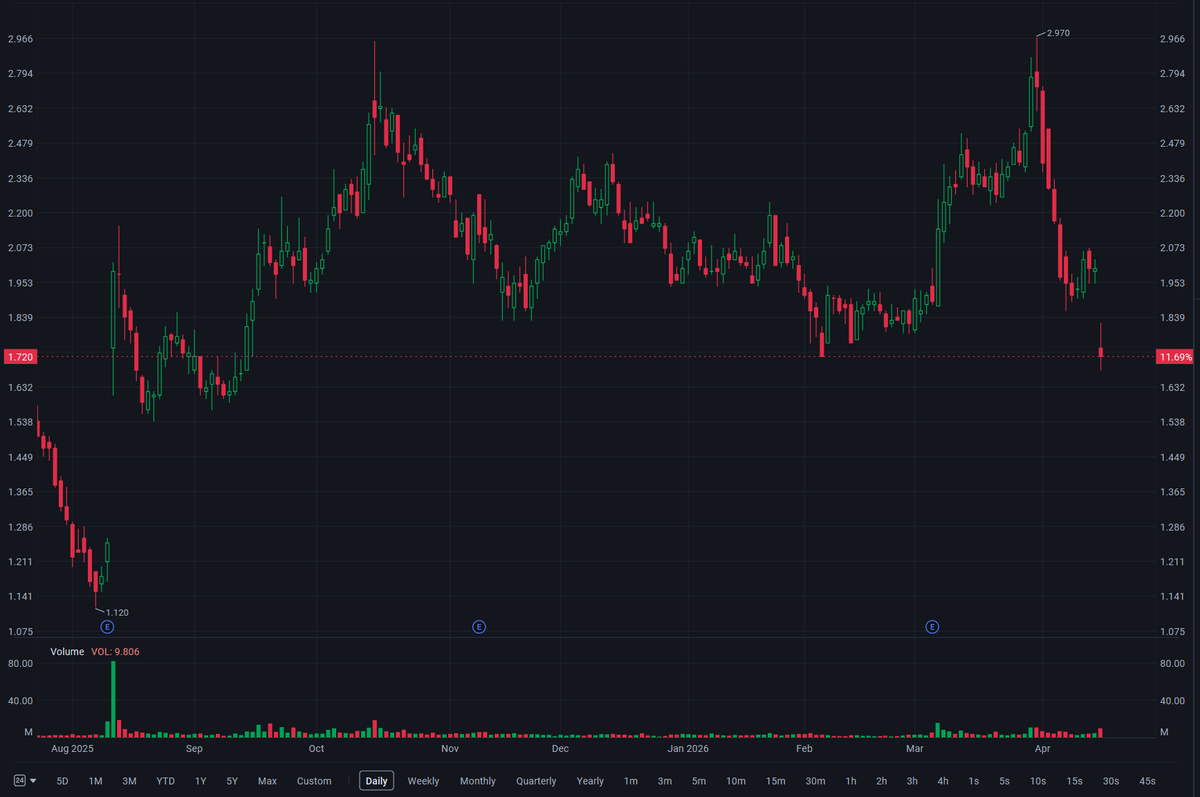
In April 2026, Gevo announced its decision to withdraw its application for a loan guarantee from the U.S. Department of Energy (DOE). While the market might initially interpret this as a bearish signal for the stock price, I hold a different perspective. Gevo believes the DOE's restrictions are too cumbersome—such as mandating the integration of immature EOR (Enhanced Oil Recovery) technologies. Given its current asset profile, Gevo is fully capable of seeking more flexible, higher-yield financing in the private capital markets. This shift from "seeking government aid" to "securing flexible capital," backed by robust operations, demonstrates strategic autonomy.
1. 2025 Financial Performance: A Quantum Leap
2025 was a watershed year for Gevo. Total annual revenue reached $161 million, an explosive growth of nearly 850% compared to approximately $17 million in 2024.
- Operating Cash Flow Turned Positive: In Q4 2025, the company achieved $20 million in positive operating cash flow, marking the first time in history Gevo proved its core business has "self-sustaining" capabilities.
- Significantly Narrowed Losses: Although net income remained negative (approx. -$33.8 million), operating losses shrank drastically. Adjusted EBITDA (Non-GAAP) reached $16 million, signaling that the business model is now fundamentally viable.
2. Sources and Sustainability of Earnings
This growth was not accidental but driven by the successful integration of physical assets:
- Core Driver: Primarily the acquisition and efficient operation of the Red Trail Energy low-carbon ethanol plant in North Dakota. The plant operated at 106% utilization in 2025, providing stable revenue from physical sales.
- Carbon Credit Monetization: The company generated $52 million in 2025 through the sale of Production Tax Credits (PTCs).
- Sustainability: This revenue model is repeatable. With further capacity expansion in 2026 (expected to reach 75 million gallons) and steady contributions from the RNG (Renewable Natural Gas) segment, Gevo has set its 2026 Adjusted EBITDA target at $400 million.
3. Policy Tailwinds: Subsidies Secured Through 2029
Gevo’s primary profit driver—the 45Z Clean Fuel Production Credit—is explicitly extended through the end of 2029 under the current legal framework.
This provides at least a four-year "policy dividend window." As long as Gevo maintains a low Carbon Intensity (CI) score through its technical advantages, it receives substantial subsidies per gallon. This "safety net" provides a valuable time window for technical upgrades without relying on external capital injections.
4. Balance Sheet Health: Zero Bankruptcy Risk Before 2029
The current financial standing is sufficient to weather future policy cycles:
- Debt Restructuring Complete: In February 2026, Gevo completed a $175 million debt restructuring, releasing $35 million in restricted cash.
- Ample Liquidity: As of year-end 2025, the company held $117 million in cash and equivalents.
- Conclusion: Given that operating cash flow has turned positive and there are no major debt default risks for the next three years, the probability of bankruptcy before 2029 is extremely low.
5. Valuation Comparison: EBITDA vs. Market Cap
- Latest Market Cap: Approx. $417M – $420M.
- EBITDA Multiples:
- 2025 Adjusted EBITDA of $16M represents an EV/EBITDA of ~26x.
- Expected 2026 EBITDA of $40M brings the forward multiple down to just ~10x.
- Potential Catalyst: Once the ATJ-30 jet fuel project (Project North Star) reaches Final Investment Decision (FID) in 2026, it is expected to contribute $150 million in annual EBITDA. At that stage, the current $417M market cap would look incredibly attractive relative to its earnings potential.
6. Product Potential and Platform Advantage
- Product: Sustainable Aviation Fuel (SAF). This is currently the only viable solution for decarbonizing the aviation industry. Gevo has locked in long-term contracts with giants like Delta and American Airlines in a market that remains severely undersupplied.
- Platform: The Verity carbon tracking platform. This is Gevo’s "soft power." By using blockchain to track every carbon footprint from field to fuel tank, Gevo ensures its products qualify for the highest-tier carbon credits. This system could eventually be sold as a standalone service to the broader agricultural and energy sectors.
Summary: Gevo has evolved from a high-risk "visionary stock" into a "growth-oriented industrial stock" with physical assets, positive cash flow, and policy protection through 2029.
Risk Warnings for Small-Cap Stocks:
- CAPEX Pressure: While the current plant is profitable, building the massive Net-Zero 1 (SAF) facility requires hundreds of millions in investment. If private financing progress lags in a high-interest-rate environment, or if construction faces overruns and delays, it will drag on the earnings timeline.
- The 2029 "Policy Cliff": Current 45Z subsidies expire in 2029. While renewal is likely, any weakening of policy support or tightening of carbon accounting standards (e.g., stricter rules for corn-based pathways) would cause significant volatility in Gevo’s profitability.
- Technological Competition: Gevo uses the Alcohol-to-Jet (ATJ) pathway. Competitors use HEFA (waste oils) or e-fuels. If the cost of competing pathways drops faster than ATJ, or if major airlines shift their technological preferences, Gevo’s long-term contracts could be impacted.
17 avril 2026 : Gevo annonce le retrait de sa demande de garantie de prêt auprès du DOE
En avril 2026, Gevo a annoncé sa décision de retirer sa demande de garantie de prêt auprès du ministère américain de l'Énergie (DOE). Si cette annonce peut être perçue comme un signal négatif pour le cours de l'action, mon point de vue est différent. Gevo estime que les restrictions du DOE sont trop contraignantes (comme l'obligation d'intégrer des technologies EOR encore immatures). Compte tenu de la solidité de ses actifs actuels, l'entreprise est tout à fait capable de solliciter des financements plus flexibles et plus rentables sur les marchés de capitaux privés. Ce passage d'une « aide gouvernementale » à une « recherche de capitaux flexibles », couplé à la santé opérationnelle de l'entreprise, démontre une réelle autonomie stratégique.
1. Performance financière 2025 : Une croissance exponentielle
L'année 2025 a marqué un tournant historique pour Gevo. Le chiffre d'affaires annuel a atteint 161 millions de dollars, soit une explosion de près de 850 % par rapport aux 17 millions de dollars de 2024.
- Flux de trésorerie opérationnel positif : Au quatrième trimestre 2025, l'entreprise a généré un flux de trésorerie opérationnel positif de 20 millions de dollars, prouvant pour la première fois que son cœur de métier est désormais « auto-suffisant ».
- Réduction significative des pertes : Bien que le résultat net reste négatif (environ -33,8 millions de dollars), les pertes d'exploitation ont été drastiquement réduites. L'EBITDA ajusté (Non-GAAP) a atteint 16 millions de dollars, confirmant la viabilité de son modèle économique.
2. Sources et durabilité des revenus
Cette croissance n'est pas le fruit du hasard, mais de l'intégration réussie d'actifs tangibles :
- Moteur principal : L'acquisition et l'exploitation efficace de l'usine d'éthanol bas carbone Red Trail Energy dans le Dakota du Nord. L'usine a fonctionné à 106 % de sa capacité en 2025, assurant des revenus stables.
- Monétisation des crédits carbone : En 2025, l'entreprise a généré 52 millions de dollars grâce à la vente de crédits d'impôt à la production (PTC).
- Pérennité : Ce modèle est durable. Avec l'augmentation de la capacité prévue en 2026 (visant 75 millions de gallons) et la contribution stable du segment GNR (Gaz Naturel Renouvelable), Gevo a fixé un objectif d'EBITDA ajusté de 40 millions de dollars pour l'ensemble de l'année 2026.
3. Soutien politique : Des subventions garanties jusqu'en 2029
La principale source de profit de Gevo — le crédit d'impôt 45Z pour la production de carburants propres — est explicitement maintenue par le cadre législatif actuel jusqu'à la fin de 2029.
Cela offre à l'entreprise une « fenêtre de dividendes politiques » d'au moins quatre ans. Tant que Gevo maintient une intensité carbone (CI) extrêmement basse grâce à sa technologie, chaque gallon de carburant bénéficie de subventions élevées. Ce « filet de sécurité » offre un temps précieux pour finaliser les mises à niveau technologiques sans dépendre de financements externes massifs.
4. Santé du bilan : Aucun risque de faillite avant 2029
La situation financière actuelle est suffisante pour traverser les prochains cycles politiques :
- Restructuration de la dette terminée : En février 2026, Gevo a finalisé une restructuration de dette de 175 millions de dollars, libérant 35 millions de dollars de trésorerie restreinte.
- Liquidités abondantes : Fin 2025, l'entreprise détenait 117 millions de dollars de trésorerie et équivalents.
- Conclusion : Avec un flux de trésorerie opérationnel devenu positif et l'absence de risque de défaut majeur sur la dette au cours des trois prochaines années, la probabilité de faillite avant 2029 est extrêmement faible.
5. Valorisation : EBITDA vs Capitalisation boursière
- Capitalisation actuelle : Environ 417 - 420 millions de dollars.
- Comparaison EBITDA :
- L'EBITDA ajusté 2025 de 16M$ représente un multiple EV/EBITDA d'environ 26x.
- L'EBITDA attendu pour 2026 (40M$) ramène ce multiple prospectif à seulement 10x.
- Potentiel de croissance : Une fois que le projet de carburant durable pour l'aviation ATJ-30 (Project North Star) aura atteint sa décision finale d'investissement (FID) en 2026, sa contribution annuelle attendue à l'EBITDA sera de 150 millions de dollars. À ce stade, la valorisation actuelle semblera dérisoire face au potentiel de gains.
6. Potentiel produit et avantage plateforme
- Produit : SAF (Carburant Durable d'Aviation). C'est actuellement la seule solution viable pour décarboner le secteur aérien. Gevo a déjà sécurisé des contrats à long terme avec des géants comme Delta et American Airlines dans un marché en forte pénurie.
- Plateforme : Verity. C'est le « soft power » de Gevo. Grâce à la blockchain, elle suit l'empreinte carbone du champ de maïs jusqu'au réservoir, garantissant les subventions les plus élevées. Ce système pourrait devenir un service indépendant vendu à l'ensemble du secteur agricole et énergétique.
Synthèse : Gevo est passée d'une « action à vision » risquée à une « action industrielle de croissance » avec des actifs réels, un flux de trésorerie positif et une protection politique jusqu'en 2029.
Avertissements sur les risques (Small Caps) :
- Pression des investissements (CAPEX) : Bien que l'usine actuelle soit rentable, la construction des futures unités géantes Net-Zero 1 (SAF) nécessite des centaines de millions de dollars. Si le financement privé prend du retard ou si les coûts de construction explosent, cela pèsera sur la rentabilité.
- La « falaise politique » de 2029 : Les subventions 45Z expirent fin 2029. Même si une extension est probable, tout affaiblissement du soutien politique ou durcissement des normes de calcul carbone impacterait violemment les marges de Gevo.
- Concurrence technologique : Gevo utilise la voie ATJ (Alcohol-to-Jet). D'autres voies existent (HEFA à base d'huiles usagées ou e-fuels). Si les coûts des technologies concurrentes chutent plus vite que ceux de l'ATJ, cela pourrait menacer la viabilité à long terme des contrats de Gevo.
2026/04/17 Gevo 宣布撤回向美国能源部 (DOE) 申请的贷款保障
2026 年 4 月,Gevo 宣布撤回向美国能源部 (DOE) 申请的贷款保障。这在股价表现上可能被视为利空,但我有点不一样的观点。Gevo 认为 DOE 的限制太多(比如要求强制绑定并不成熟的 EOR 技术),而以它目前的资产状况,完全可以去私人资本市场寻求更高回报率、更灵活的融资。这种从“求政府救济”到“寻找更灵活资本方”的转变,结合公司的经营状况,显示公司的战略自主选择。
1. 2025年盈利表现:跨越式增长
2025 年是 Gevo 的“分水岭”。公司全年营业收入达到 1.61 亿美元,相比 2024 年的约 1,700 万美元,实现了接近 850% 的爆发式增长。
- 经营现金流转正: 在 2025 年第四季度,公司实现了 2,000 万美元 的正向经营现金流,这是公司历史上首次证明其核心业务具备“造血”能力。
- 亏损显著收窄: 虽然净利润仍为负(约 -3,380 万美元),但运营亏损已大幅缩减,非公认会计准则(Non-GAAP)下的调整后 EBITDA 达到 1,600 万美元,标志着其商业模式已初步跑通。
2. 盈利来源与持续性
这种盈利增长并非偶然,而是源于实物资产的成功整合:
- 核心来源: 主要是收购并高效运营了北达科他州的低碳乙醇工厂(Red Trail Energy)。该工厂 2025 年超负荷运转(利用率 106%),提供了稳定的实物销售收入。
- 碳信用变现: 2025 年公司通过出售生产税收抵免(PTC)获得了 5,200 万美元。
- 持续性: 这种收入模式是可持续的。随着 2026 年产能进一步释放(预计增至 7,500 万加仑)以及可再生天然气(RNG)业务的稳定贡献,公司已将 2026 全年调整后 EBITDA 目标定为 4,000 万美元。
3. 政策护航:补贴确定持续到 2029 年
Gevo 最核心的利润来源——45Z 清洁燃料生产税收抵免,在目前的法律框架下已明确持续到 2029 年底。
- 这为公司提供了至少 4 年的“政策红利期”。只要公司能通过技术手段维持极低的碳强度(CI)得分,每加仑燃料都能获得高额补贴。这层“安全垫”为公司在不依赖外部输血的情况下完成技术升级提供了宝贵的时间窗。
4. 资产负债表健康度:2029 年前无破产风险
目前的财务状况足以支撑公司度过未来的政策周期:
- 债务重组完成: 2026 年 2 月,Gevo 完成了 1.75 亿美元 的债务重组,释放了 3,500 万美元 的受限现金。
- 流动性充裕: 截至 2025 年底,公司持有 1.17 亿美元 的现金及等价物。
- 结论: 考虑到其经营性现金流已经转正,且未来三年没有重大债务违约风险,Gevo 在 2029 年前发生破产的可能性极低。
5. 估值对比:EBITDA 与市值
- 最新市值: 约 4.17 亿 - 4.2 亿美元。
- EBITDA 对比:
- 2025 年调整后 EBITDA 为 1,600 万美元(EV/EBITDA 倍数约 26 倍)。
- 2026 年预期 EBITDA 为 4,000 万美元(对应当前市值的远期倍数仅约 10 倍)。
- 潜力释放: 一旦其 ATJ-30 喷气燃料项目(Project North Star)在 2026 年达成最终投资决策(FID),该项目预期的年度 EBITDA 贡献将达到 1.5 亿美元。届时,当前的 4.17 亿市值相比其盈利潜力将显得极具吸引力。
6. 产品潜力与平台优势
- 产品:可持续航空燃料 (SAF)。这是目前航空业脱碳的唯一可行方案。Gevo 已锁定了达美航空、美国航空等巨头的长期订单,市场处于严重的“供不应求”状态。
- 平台:Verity 碳追踪平台。这是 Gevo 的软实力。通过区块链追踪从农田到油箱的每一个碳足迹,确保其产品能拿到最高等级的碳信用补贴。这套系统未来甚至可以作为独立服务卖给整个农业和能源行业。
Gevo 已经从一只高风险的“愿景股”变成了一只有实物资产、有正向现金流、且受政策保护到2029年的“成长型工业股”。
这种小盘股高风险、风险提示:
- 巨额资本支出(CAPEX)压力: 虽然目前工厂在赚钱,但要建设未来的 Net-Zero 1 (SAF) 大型工厂,需要投入数亿美元。尽管公司撤回了政府贷款申请以追求更灵活的私人融资,但如果在高利率环境下融资进度不及预期,或者工程建设出现超支和延期,将拖累整体盈利节奏。
- 2029 年后的“政策断崖”: 目前的 45Z 补贴有效期至 2029 年。虽然届时大概率会续期,但如果 2029 年后政策力度减弱,或者美国对生物燃料的碳核算标准变得更加苛刻(例如收紧对玉米路径的认可),Gevo 的盈利水平将面临剧烈波动。
- 技术替代与竞争风险: 在可持续航空燃料(SAF)领域,除了 Gevo 采用的酒精转航空燃料(ATJ)路径,还有利用废弃油脂(HEFA)或电子燃料(e-fuels)的路径。如果竞争路径的成本下降速度远快于 ATJ,或者主要航空公司改变了技术偏好,将影响 Gevo 长期合同的履行。
Risk Warning: This post is a result of personal study and does not constitute financial advice. I am currently in the process of learning translation, so there may be inaccuracies in the language used.
Position Disclosure: As of the time of publication, the author holds a position in this company. This is the reason I chose to research this topic. The author has no plans to trade this stock within the next 72 hours.