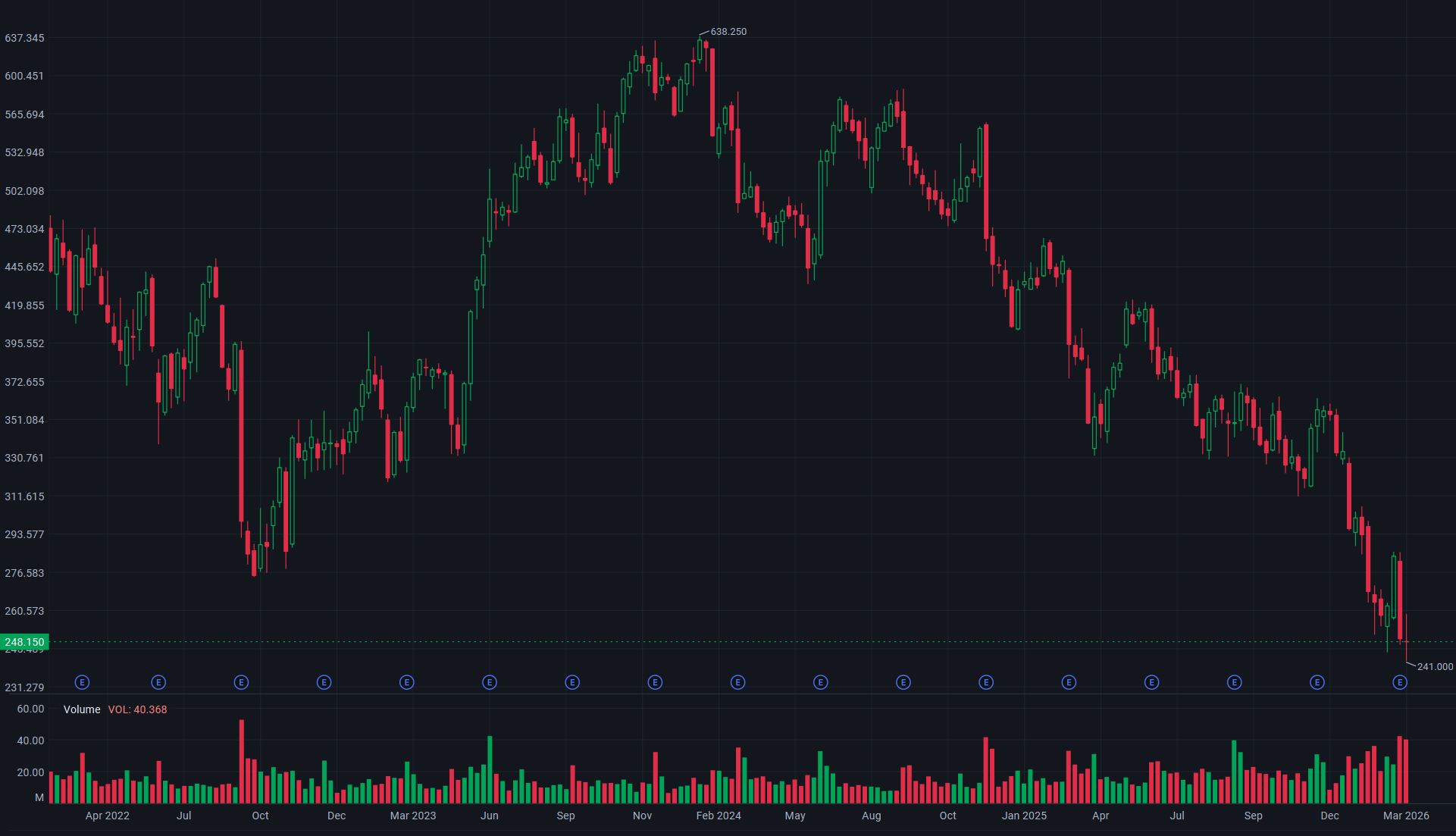
2026/03/22 Will AI Kill Adobe(ADBE)?
Yesterday, I analyzed the topic
 ZeleFelis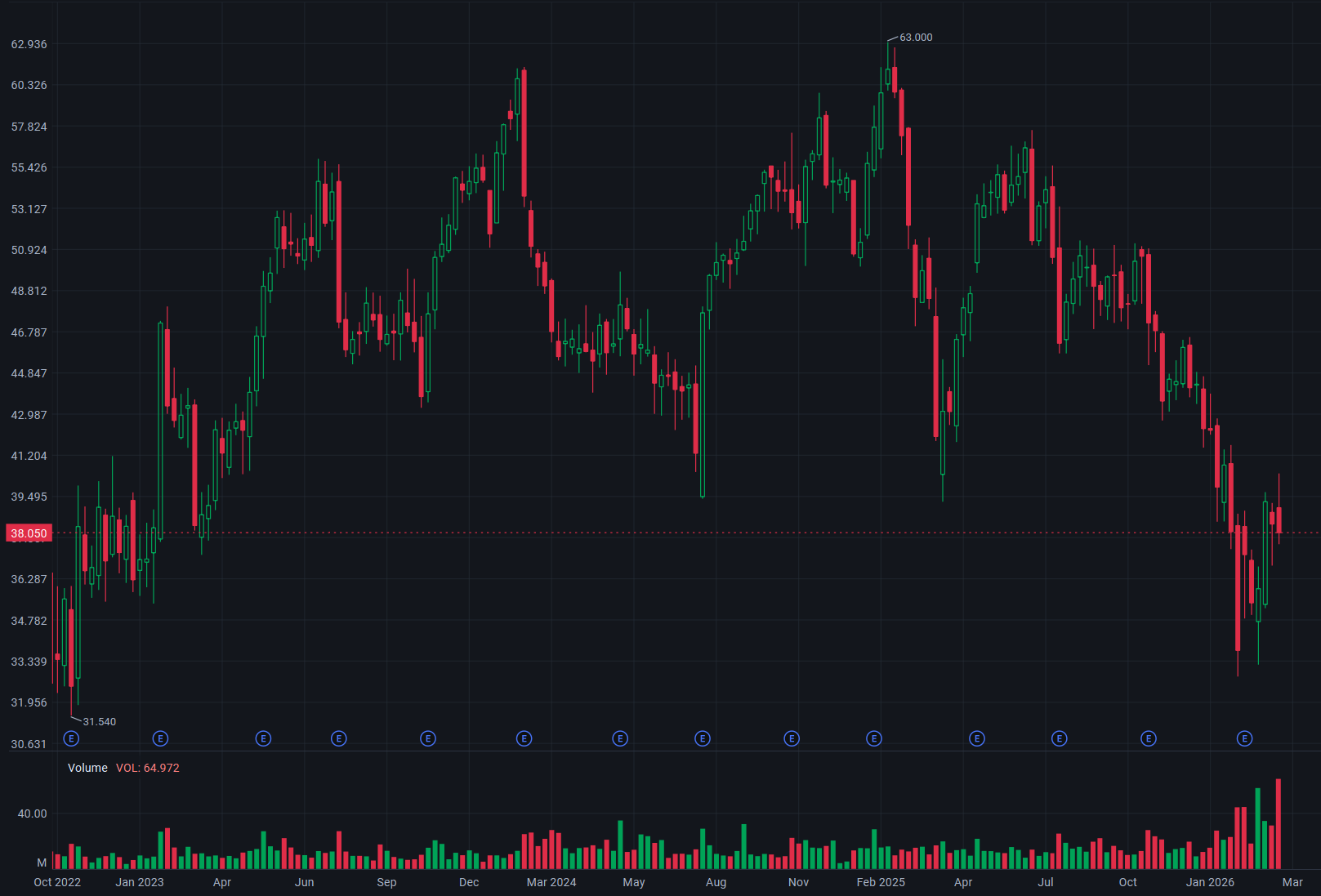
and concluded that the more AI evolves, the more Dynatrace’s business actually stands to benefit. In contrast, Adobe finds itself in a precarious position today. While its past was undeniably glorious, its future remains shrouded in uncertainty. The rise of AI has cast a shadow over Adobe’s revenue streams, leaving its rock-bottom valuation as either a "golden opportunity" or a "value trap."
Prologue: The Desanctification of the “Layer”
In the world of creative design, Adobe was once the only true religion. Photoshop’s layers and Premiere’s timelines were the mandatory stations of the cross for anyone seeking entry into the temple of professional visuals. But from our vantage point in 2026, we are witnessing a collapse of that power: AI is successfully “democratizing aesthetic authority.”
What once required three years of grueling technical mastery can now be summoned in seconds via a prompt in Midjourney or Canva. This wave of “de-skilling” is currently reaping Adobe’s first generation of converts.
Phase 1: The Fissure — Who is Abandoning Adobe?
The Question: Is Adobe truly being disrupted by AI?
The Answer: Disruption has already begun at the periphery.
Adobe’s crisis doesn’t stem from a “better Photoshop,” but from a fundamental disenchantment with the tools themselves.
- The Exodus of Personal Users: For influencers, students, and freelancers, the Adobe suite is too heavy, too expensive, and too complex. When Canva’s AI Magic Studio can deliver a “one-click masterpiece,” subscribing to Creative Cloud feels like buying a high-maintenance steam engine in the age of the internal combustion engine.
- The Besieged Fortress: Today, Adobe is a walled city under siege. Outside the gates are native AI tools—wild, agile, and dead-simple. Inside, Adobe clings to its enterprise clients who remain largely out of sheer institutional inertia.
Phase 2: The Hidden Hand — What is Keeping the Empire Alive?
The Question: If the “retail” users are fleeing, how is Adobe still sustaining tens of billions in revenue?
The Answer: Because it holds the “compliance lifeline” for big business.
Analyzing Adobe’s FY2025-2026 revenue (approx. $23.7 billion) reveals a clear survival floor:
Digital Media (~75% of Revenue): While individual subscriptions are cratering, 65% of this segment comes from Enterprise and Team accounts.
The Anatomy of the Moat:
Copyright Purity: Fortune 500 companies are terrified of “black box” AI models. Adobe Firefly remains one of the few platforms offering commercial IP indemnification. This “compliance security” is currently the only reason large institutions continue to cut massive checks for subscriptions.
Workflow Stickiness: From the initial shoot to final distribution, Adobe’s “all-in-one” workflow has IT departments in a chokehold. It’s easy to ditch Photoshop; it’s nearly impossible to rip out an entire marketing ecosystem like the Experience Cloud.
Phase 3: The Blind Spot — How Long Can a Fragile Defense Last?
The Question: If “losing individuals but defending enterprise” is the status quo, where is the breaking point?
The Answer: The risk lies in the fact that “Generation” is replacing “Editing.” Adobe’s current logic is: AI generates the assets, then you use our tools to polish them. But what happens when AI’s “out-of-the-box” quality hits 95%?
- Workflow Re-engineering: When Sora 2 or Google Veo can generate high-fidelity commercial video directly, the intricate timeline of Premiere Pro becomes a redundant artifact.
- The Defender’s Dilemma: Adobe is currently in a “defensive crouch” in the enterprise market. If they fail to set the new productivity standard for the AI era—and instead merely stitch AI “band-aids” onto legacy software—their moat will turn into nothing more than a shortening fuse.
Phase 4: The Sprint — The Countdown to a Dry Moat
The Question: How long will it take for AI to bridge the “Copyright” and “Precision Control” gap that protects Adobe’s enterprise base?
The Answer: Shockingly soon—likely within the next 12 to 18 months.
- The Death of the Compliance Premium: By 2026, OpenAI and Google have begun offering comparable IP protection for enterprise users. Adobe’s “Compliance Monopoly” is evaporating.
- The Precision Breakthrough: AI’s Achilles’ heel used to be the “change one thing, break everything” problem. No longer. With the maturity of “semantic-level local control,” AI has become a precision scalpel, capable of adjusting the specular highlight on a logo or the texture of a fabric without disturbing the rest of the frame.Once AI is both compliant and precise, why would a corporation stay chained to Adobe’s overhead?
Phase 5: The End Game — A Terrifying Valuation Gambit
The Question: Is Adobe’s 15x P/E a “Value Trap” or a “Golden Entry Point”?
The Answer: It is a position of extreme existential tension. The market has already passed its verdict: Adobe’s P/E has plummeted from a peak of 45x to a humble 15x. This reflects a consensus: “The personal business is dead.”
- The Illusion of Safety: A 15x P/E looks comfortable—it looks like a bulletproof vest.
- The Real Crisis: This price does not yet price in an Enterprise collapse. If the next few quarters show a stagnation or churn in Enterprise ARR (Annual Recurring Revenue), 15x will not be the floor; it will be the trapdoor.
Epilogue: Nokia or Apple?
Adobe isn’t dead yet, but it is undergoing the most agonizing reinvention since its founding. It is racing to transform from a “Tool Seller” into an “AI Workflow Orchestrator” before its moat dries up completely.
If they win, this is the value-buy of the decade. If they lose, we are watching the final act of a creative empire.
Hier, j'ai analysé la question :
 ZeleFelis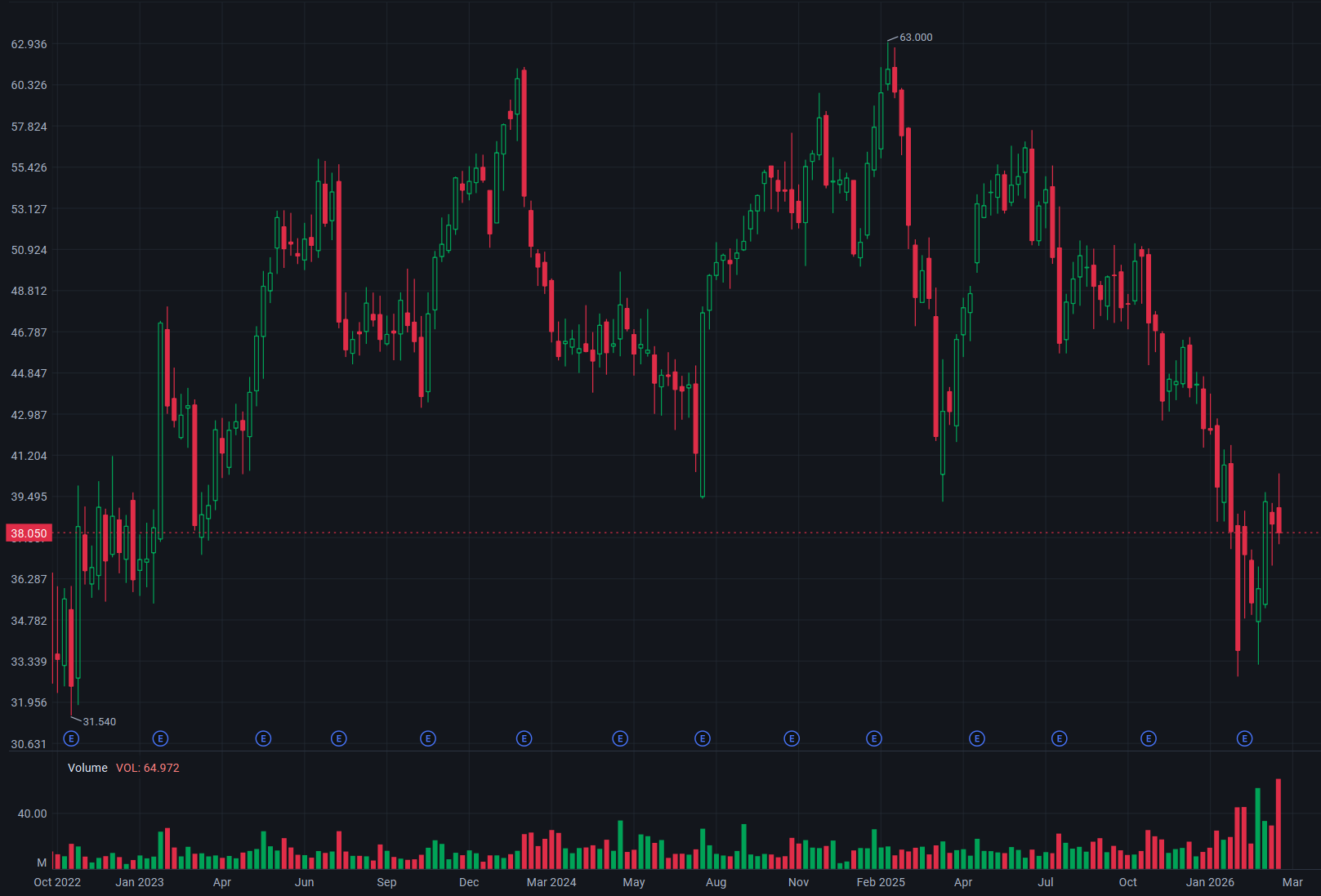
J'ai réalisé que plus l'IA progresse, plus Dynatrace en tire profit. À l'inverse, Adobe occupe aujourd'hui une position plutôt inquiétante. Si son passé fut glorieux, son avenir, lui, reste illisible. L'émergence de l'IA fait peser une incertitude sur les revenus d'Adobe, et sa valorisation historiquement basse représente soit une opportunité en or, soit un piège à valeur.
Prologue : La désacralisation du « Calque »
Dans l’univers de la création, Adobe était jadis l’unique religion. Le calque sur Photoshop, la timeline sur Premiere : autant de passages obligés pour accéder au temple de l’image professionnelle. Mais en 2026, nous assistons à un effondrement du sacré : l’IA est en train de parachever la « démocratisation de l’autorité esthétique ».
Ce qui exigeait trois ans d’apprentissage technique acharné se résume aujourd’hui à quelques secondes dans un champ de texte sur Midjourney ou Canva. Cette vague de « dé-spécialisation » est en train de décimer les premiers rangs des fidèles d’Adobe.
Premier acte : La fissure — Qui abandonne Adobe ?
La question : Adobe va-t-elle réellement être balayée par l’IA ?
La réponse : La disruption a déjà commencé par les marges. La crise d’Adobe ne vient pas d’un « meilleur Photoshop », mais d’un désenchantement fondamental vis-à-vis de l’outil lui-même.
- L’exode des particuliers : Pour les influenceurs, les étudiants ou les freelances, la suite Adobe est trop lourde, trop chère, trop complexe. Quand le « Magic Studio » de Canva livre un chef-d’œuvre en un clic, s’abonner au Creative Cloud revient à s’obstiner à acheter une machine à vapeur à l’ère du moteur à explosion.
- La citadelle assiégée : Aujourd’hui, Adobe ressemble à une ville fortifiée. À l’extérieur des murs, des outils IA natifs, agiles et d’une simplicité redoutable. À l’intérieur, des clients « Entreprise » qui ne restent que par pure inertie institutionnelle.
Deuxième acte : L’atout maître — Qu’est-ce qui maintient l’Empire en vie ?
La question : Si les particuliers s’enfuient, comment Adobe maintient-elle des revenus se comptant en dizaines de milliards ?
La réponse : Parce qu’elle détient « l’assurance survie » des grands groupes : la conformité. En disséquant les revenus d’Adobe pour l’exercice 2025-2026 (environ 23,7 milliards de dollars), on identifie un plancher de survie très net :
Digital Media (~75% des revenus) : Si les abonnements individuels s’effondrent, 65% de ce segment provient des comptes Entreprises et Équipes.
L’anatomie du fossé (The Moat) :
L’obsession du copyright : Les entreprises du Fortune 500 redoutent les modèles IA « boîtes noires ». Adobe Firefly est l’un des rares à offrir une garantie contre le risque de violation de propriété intellectuelle. Cette sécurité juridique est aujourd’hui la seule raison pour laquelle les grands comptes continuent de signer des chèques massifs.
L’écosystème verrouillé : De la prise de vue à la diffusion, le flux de travail Adobe emprisonne les directions informatiques. On délaisse Photoshop facilement ; on n’arrache pas un écosystème marketing complet comme l’Experience Cloud sans douleur.
Troisième acte : L’angle mort — Combien de temps la « défense » peut-elle tenir ?
La question : Si la perte du grand public est compensée par la défense des entreprises, où se situe le point de rupture ?
La réponse : Le risque réside dans le fait que la « Génération » remplace l’« Édition ». La logique actuelle d’Adobe est la suivante : l’IA génère, puis vous utilisez nos outils pour peaufiner. Mais qu’advient-il lorsque la qualité de sortie de l’IA atteint 95 % ?
- Reconfiguration des flux : Quand Sora 2 ou Google Veo génèrent directement une vidéo commerciale haute fidélité, le montage complexe sur Premiere Pro devient un vestige du passé.
- Le dilemme du défenseur : Adobe est en position de « défense passive ». Si elle échoue à instaurer le nouveau standard de productivité de l’ère IA, et se contente de « patcher » ses vieux logiciels avec des extensions IA, ses remparts ne seront plus qu’un sursis.
Quatrième acte : La course de vitesse — Le compte à rebours
La question : Combien de temps faudra-t-il à l’IA pour combler le fossé de la « précision » et de la « conformité » ?
La réponse : C’est une question de mois — probablement entre 12 et 18.
- La fin de l’avantage juridique : D’ici 2026, OpenAI et Google proposent déjà des protections IP équivalentes pour les entreprises. Le monopole de la conformité d’Adobe s’évapore.
- La percée de la précision : Le talon d’Achille de l’IA était le contrôle local (« changer un détail brise tout »). C’est terminé. Avec la maturité du contrôle sémantique, l’IA devient un scalpel de précision capable d’ajuster le reflet d’un logo ou la texture d’un tissu sans altérer le reste.Une fois l’IA à la fois conforme et précise, quelle raison restera-t-il aux entreprises de payer la « taxe Adobe » ?
Cinquième acte : Le dénouement — Un pari boursier glaçant
La question : À 15 fois son bénéfice (P/E), Adobe est-elle une « opportunité en or » ?
La réponse : C’est une position d’une tension existentielle extrême. Le marché a déjà rendu son verdict : le P/E d’Adobe est passé de 45x à 15x. Cela reflète un consensus : « Le segment des particuliers est mort. »
- L’illusion de sécurité : Un P/E de 15x semble confortable, comme un gilet pare-balles.
- La vraie crise : Ce prix n’intègre pas encore l’effondrement potentiel du segment Entreprise. Si les prochains trimestres montrent une stagnation ou un désabonnement des grands comptes (ARR), le 15x ne sera pas un plancher, mais une trappe.
Conclusion : Nokia ou Apple ?
Adobe n’est pas encore morte, mais elle subit la mue la plus douloureuse de son histoire. Elle fait la course pour passer de « vendeur d’outils » à « chef d’orchestre de flux IA » avant que ses douves ne soient totalement asséchées.
S’ils gagnent, c’est le casse du siècle pour les investisseurs. S’ils échouent, nous assistons aux dernières heures d’un empire créatif.
昨天,我深入分析
 ZeleFelis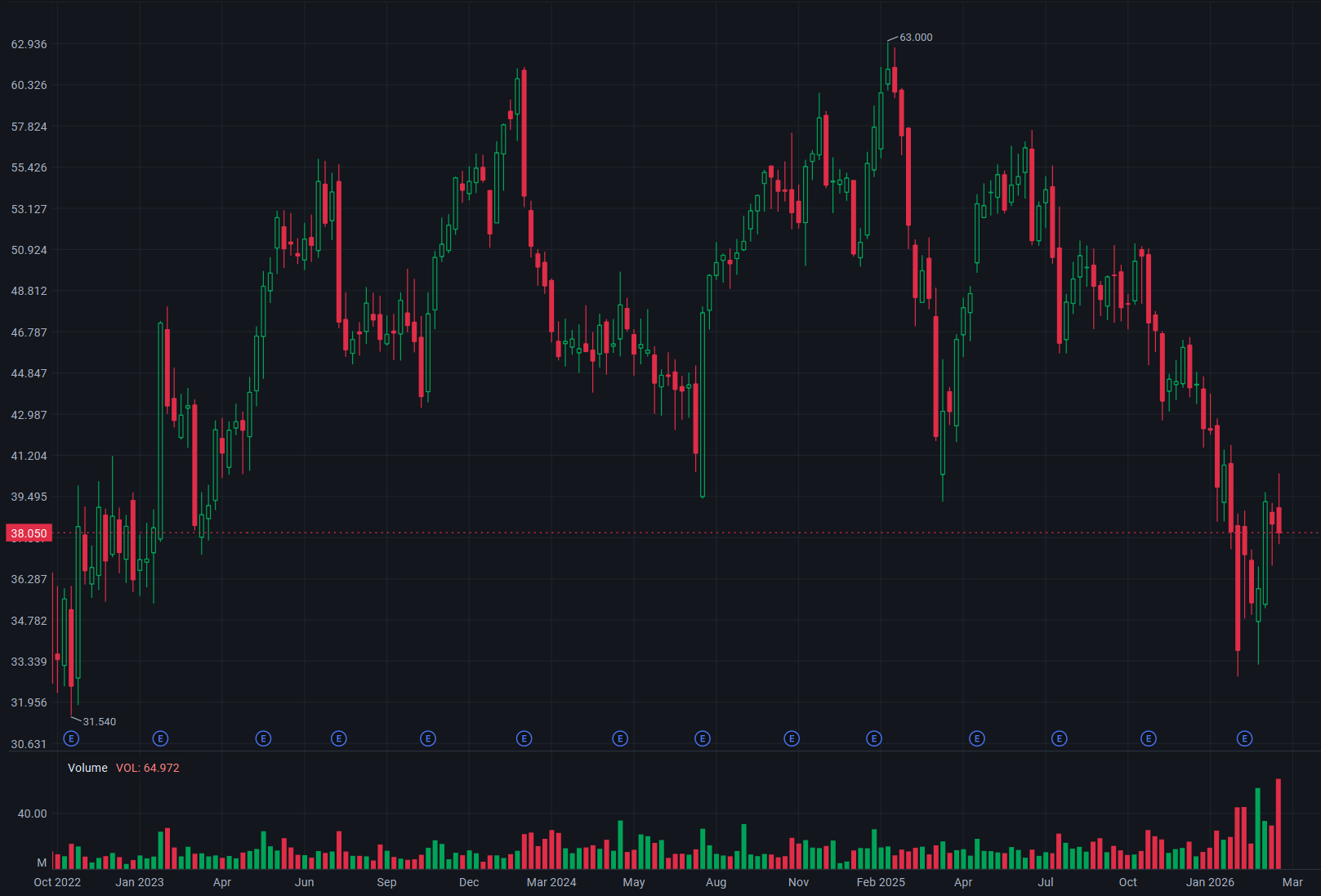
了这一命题,并意识到 AI 的进化反而会成为 Dynatrace 业务的加速器。相比之下,今天的 Adobe 则置身于一个令人心惊的十字路口:它拥有无比辉煌的过去,却让人看不透是否仍有灿烂的未来。AI 的介入让 Adobe 的收入前景疑云重重,而其处于历史低位的估值,要么是一个诱人的“黄金坑”,要么就是一个致命的“价值陷阱”。
序幕:不再神圣的“图层”
在创意界,Adobe 曾是唯一的宗教。Photoshop 的图层、Premiere 的时间轴,那是通往专业视觉殿堂的必经阶梯。但站在 2026 年的节点回望,我们正目睹一场权力的崩塌:AI 正在完成“审美权力的下放”。
曾经需要苦练三年的修图技能,如今在 Midjourney 或 Canva 的文本框里只需几秒。这场“去技能化”的浪潮,正在收割 Adobe 的第一批信徒。
第一环:裂痕 —— 谁在抛弃 Adobe?
问题:Adobe 真的会被 AI 颠覆吗?
回答: 颠覆已经从边缘开始了。 Adobe 的危机并非源于另一个“更好的 Photoshop”,而是源于用户对“工具”本身的祛魅。
- 个人用户的流失: 对于小红书博主、学生和自由职业者来说,Adobe 太重、太贵、太复杂。当 Canva 的 AI 魔法工作室能“一键出片”时,订阅 Creative Cloud 就像是在内燃机时代坚持购买昂贵的蒸汽机。
- 防守的阵地: 现在的 Adobe 像一座被围困的孤城。城外,是野蛮生长、极致简单的原生 AI 工具;城内,是依靠惯性维持的企业级客户。
第二环:底牌 —— 谁在为老牌帝国续命?
问题:既然“散户”正在逃离,Adobe 凭什么还能维持数百亿美元的营收?
回答: 因为它手里握着大企业的**“合规命脉”**。 通过拆解 Adobe 2025-2026 财年的收入版图(约 237 亿美元),我们能看到清晰的生存底线:
Digital Media (约 75% 营收): 尽管个人订阅萎缩,但其中 65% 来自企业与团队用户。
护城河的构成:
版权洁癖: 财富 500 强不敢用来源不明的 AI 模型。Adobe Firefly 是全球唯一敢提供“商业侵权索赔担保”的 AI。这种“合规安全感”是大型机构支付高额订阅费的唯一理由。
全家桶粘性: 从拍摄到分发,Adobe 的“全工作流”锁死了 IT 部门。拔掉一个 PS 容易,拔掉整套营销生态系统(Experience Cloud)难如登天。
第三环:盲区 —— 脆弱的“防守”能撑多久?
问题:如果“个人失守、企业防守”是现状,那最终的崩盘点在哪里?
回答: 风险在于,“生成”正在取代“编辑”。 目前的 Adobe 逻辑是:AI 帮你生成素材,你再去 PS 里精修。但如果 AI 的成品率达到 95% 呢?
- 工作流重构: 当 Sora 2 或 Google Veo 能直接生成高品质商业视频时,复杂的 Premiere 剪辑就变成了多余的动作。
- 防守者的悲哀: Adobe 目前在企业级市场处于“防守姿态”。如果它不能在 AI 时代创造出新的生产力标准,而只是在旧工具上缝补 AI 插件,那么它所谓的护城河,不过是一道正在缩短的防线。
第四环:竞速 —— 护城河干涸倒计时
问题:AI 获取 Adobe 企业级客户的“版权”与“控制”优势,还需要多久?
回答: 答案惊人地短——或许就在未来 12 到 18 个月。
- 版权红利的消失: 到 2026 年,OpenAI 和 Google 已经开始为企业用户提供同等级别的 IP 保护。Adobe 的“合规唯一性”正在瓦解。
- 精准度的突破: 曾经 AI 的短板是“改一处、变全图”。但随着“语义级局部控制”的成熟,AI 已经变身精密手术刀,能够精准调整一个 Logo 的光影或一件衣服的纹理。 一旦 AI 既合规又精准,大企业还有什么理由死守昂贵的 Adobe?
第五环:终局 —— 惊悚的估值博弈
问题:15 倍市盈率(P/E)的 Adobe,现在是“黄金坑”吗?
回答: 这是一个极其惊悚的位置。 资本市场已经给出了判决:Adobe 的 P/E 从 45 倍的高点滑落至 15 倍。这反映了市场的一种共识:“个人业务已经完蛋了。”
- 估值的假象: 15 倍 P/E 看起来很有安全感,像是一道坚固的防弹背心。
- 真正的危机: 但这个价格尚未完全反映“企业级失守”的预期。如果接下来的财报中,企业级 ARR(年度经常性收入)出现增长停滞或流失,15 倍将不再是地板,而是下坠的起点。
结语:诺基亚还是苹果?
Adobe 并没有死,它正在经历自成立以来最痛苦的重塑。它正试图在护城河彻底干涸前,把自己从一个“卖软件的”变成一个“卖 AI 工作流的”。
如果它赢了,这是价值回归的盛宴;如果它输了,这便是创意帝国落幕的前奏。
Risk Warning: This post is a result of personal study and does not constitute financial advice. I am currently in the process of learning translation, so there may be inaccuracies in the language used.
Position Disclosure: As of the time of publication, the author holds a position in this company. This is the reason I chose to research this topic. The author has no plans to trade this stock within the next 72 hours.